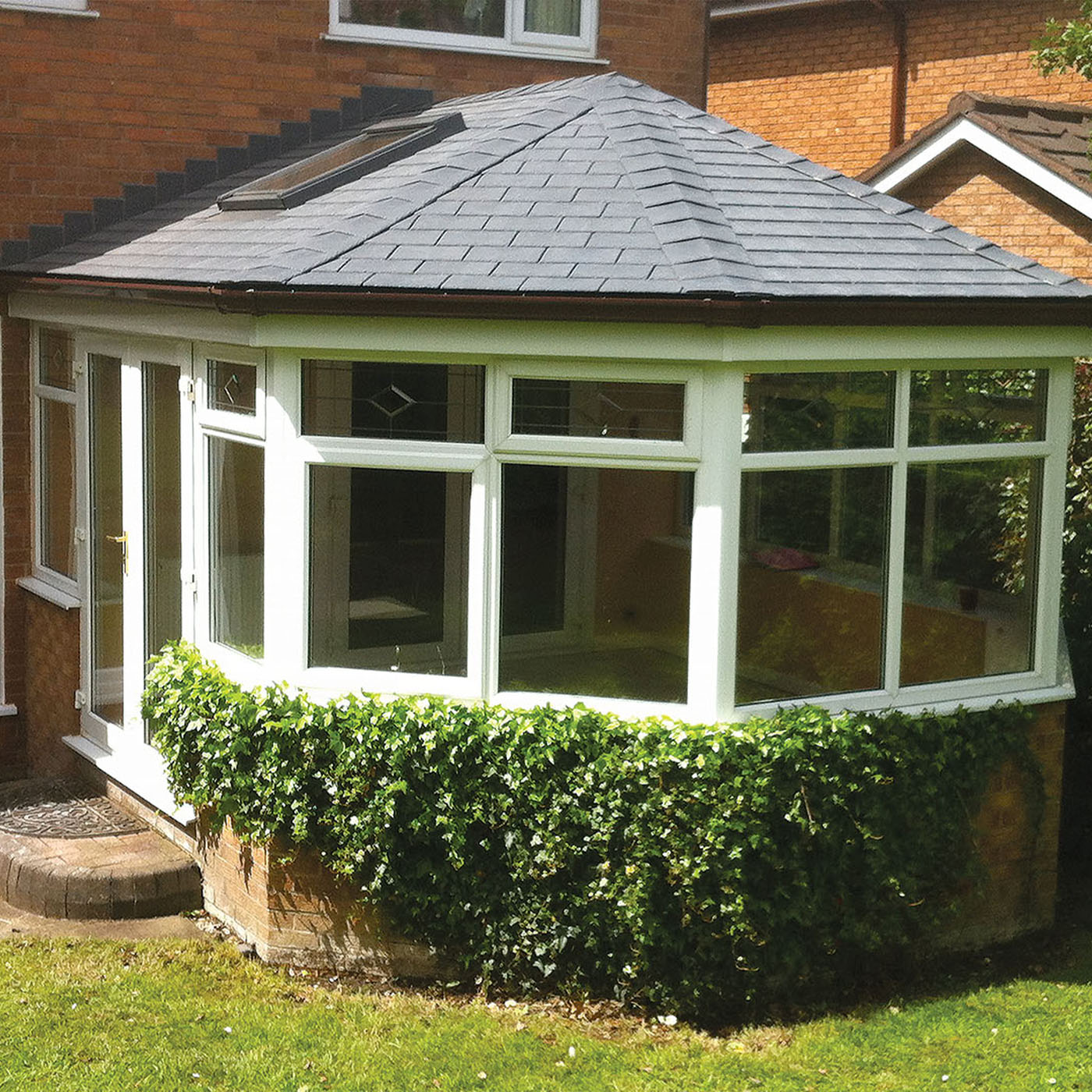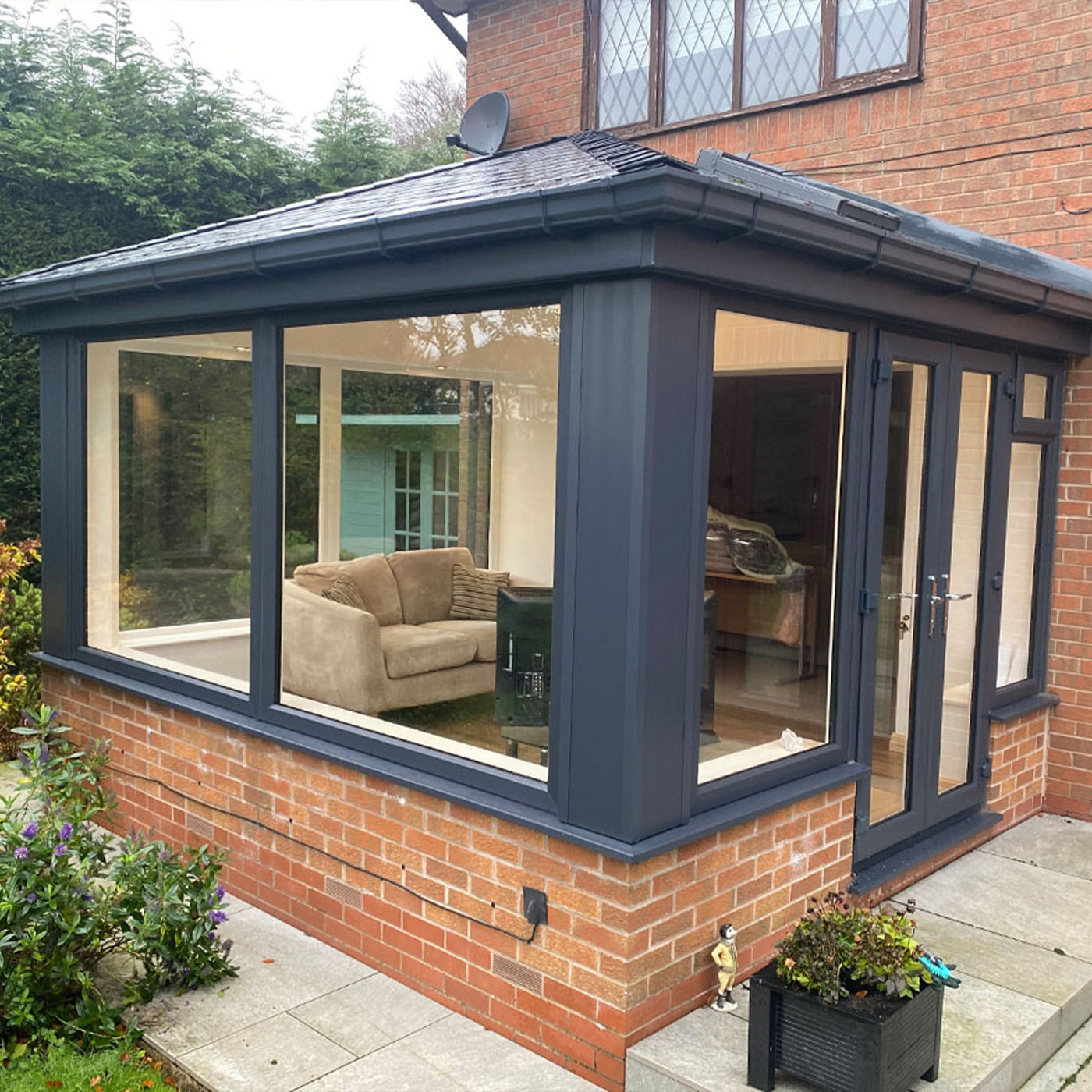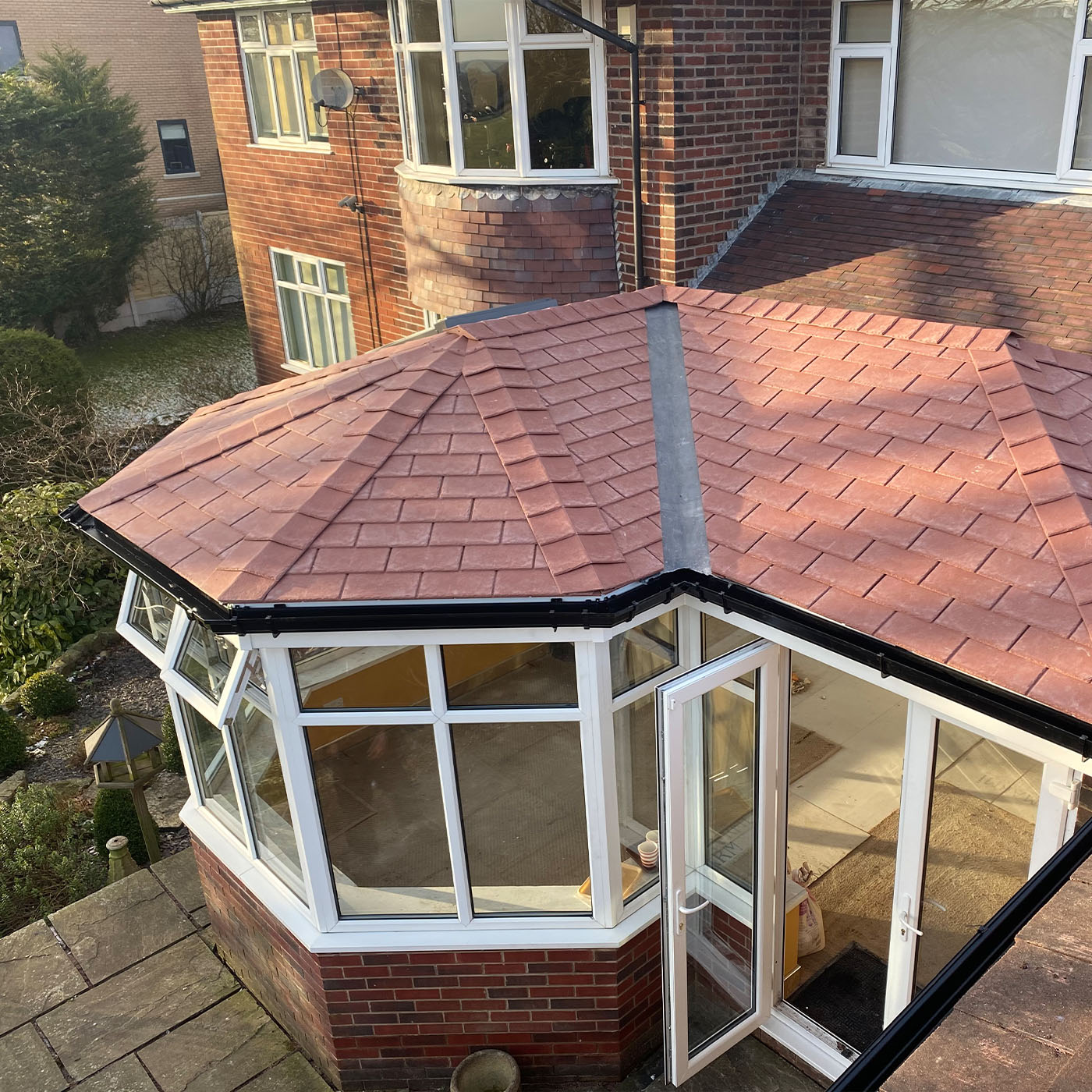


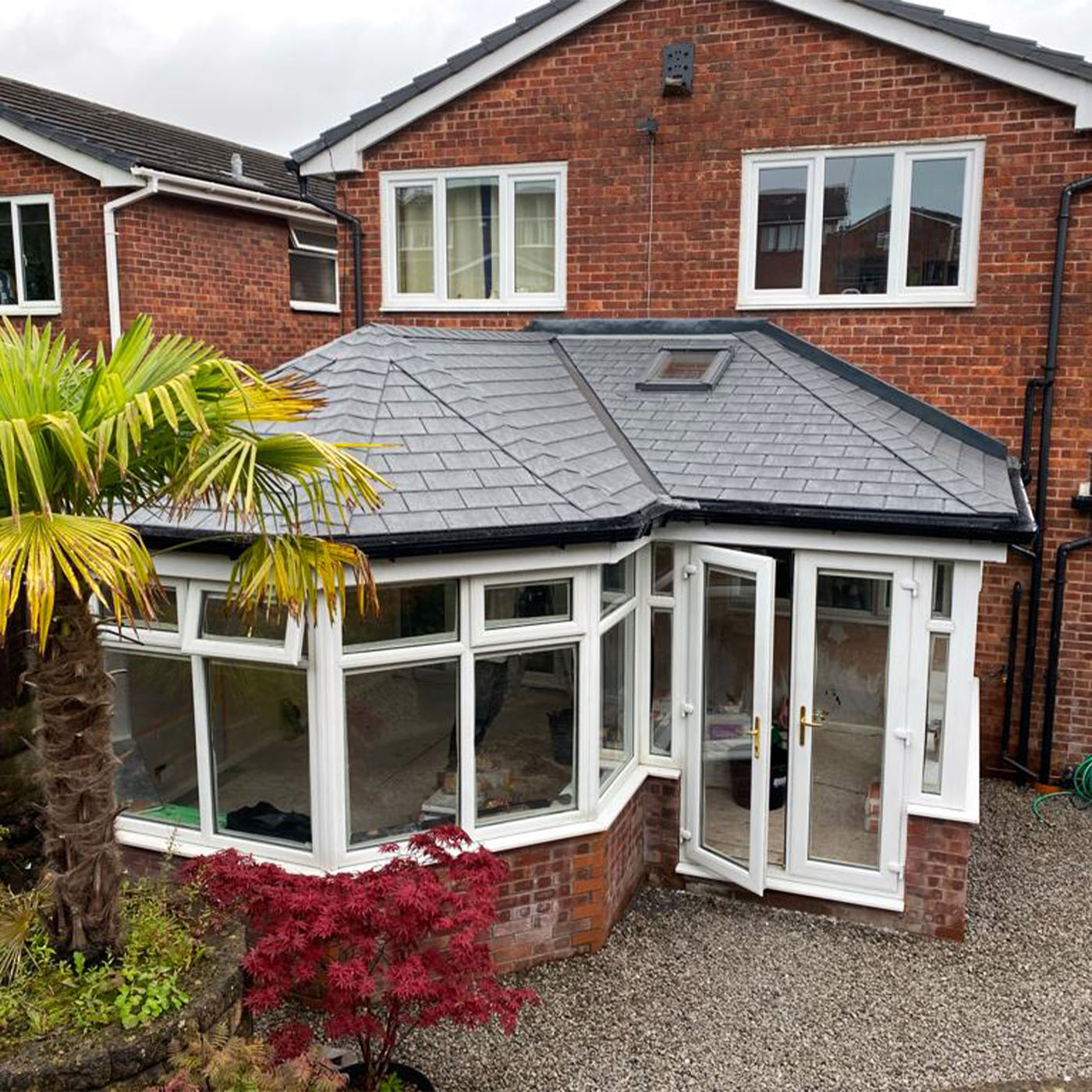
How Long Does a Tiled Conservatory Roof Last? (And When to Replace Yours)
(This post is accurate for the UK at the time of writhing in April 2026)
A properly installed tiled conservatory roof lasts 40 to 50+ years in the UK, with most tile manufacturers offering guarantees between 20 and 40 years on the outer covering. The structural timber or steel frame underneath typically outlasts the tiles. Compare that with a polycarbonate conservatory roof (10 to 15 years before discolouration and brittleness) or a glass roof (15 to 25 years before seals fail), and a tiled roof is the longest-lasting option by a wide margin, providing it’s installed correctly.
Here’s what affects that lifespan, how to tell when a roof is nearing the end of its service life, and, if yours is, how to decide between repair and full replacement.
Tile-by-tile lifespan: what the manufacturers actually guarantee
Roof life comes down to two things: the structural frame underneath and the outer tile. Structural frames, when engineered properly, last decades. It’s the tiles that weather. Here’s what the market currently offers.
| Tile type | Typical lifespan | Manufacturer guarantee |
|---|---|---|
| Supaslate Pro Line (plastic composite) | 35 to 50 years | 20-year guarantee |
| Tapco Classic Slate (dolomite/polypropylene) | 50+ years | 40-year guarantee, limited lifetime warranty |
| Metrotile Shingle (aluzinc-coated steel) | 40 to 60 years | 40-year weatherproof guarantee |
| Natural slate | 80 to 100+ years | Typically 50-year product warranty |
| Clay tiles | 60 to 100 years | 30 to 50 years |
| Concrete tiles | 40 to 60 years | 30 years |
At Roof2Room we fit Supaslate, Tapco or Metrotile as standard on our tiled conservatory roof system. The reason we don’t typically fit natural slate or clay on a conservatory is weight. A natural slate roof weighs around 35 to 45 kg/m², whereas a Tapco or Metrotile roof comes in at around 12 to 15 kg/m². A conservatory’s dwarf walls and existing frames weren’t engineered to carry the weight of a traditional tiled roof.
What affects tiled conservatory roof lifespan in real life?
Manufacturer guarantees tell you what a tile can do in lab conditions. Real-world lifespan depends on five things.
1. The quality of installation
This is the single biggest factor. A well-installed tiled roof will outlast its guarantees. A poorly installed one can fail in 5 to 10 years. The biggest install issues we see on other companies’ work:
- Inadequate ventilation. A tiled conservatory roof must be fully ventilated beneath the tiles. Without it, moisture builds up, timber rots, and tiles lift. Our Insullite system is 100% ventilated and condensation-free by design. That’s not marketing copy, it’s why we chose timber over aluminium.
- Over-cladding. Some installers simply lay insulation and tiles on top of the old polycarbonate. This traps moisture between the old and new layers, bypasses Building Regulations, and reduces lifespan to maybe 10 to 15 years.
- Wrong structural approach. If the new roof isn’t transferring load back to the house structure, the existing frames and dwarf wall take stresses they weren’t designed for. Cracks and leaks follow.
2. The insulation and ventilation spec
A damp, poorly ventilated roof structure is the fastest way to shorten its life. Our Insullite system achieves a U-value of 0.15 W/m²K with full ventilation beneath the tiles, meaning no condensation forms inside the roof and timber stays dry.
3. Exposure
A conservatory on the south coast gets more UV. A conservatory in West Yorkshire gets more driven rain. A conservatory in the Lake District gets both. Premium synthetic tiles (Tapco, Metrotile) are UV-stabilised and rated for exposure well beyond what most UK locations throw at them, but even so, any roof facing the prevailing weather (usually south-westerly in the UK) will weather faster than a sheltered one.
4. Maintenance
Tiled conservatory roofs need very little maintenance (one of the reasons people choose them), but “very little” isn’t “none”. An annual visual check, gutter clean twice a year, and moss treatment if you’re in a shaded north-facing plot will add years to the life.
5. The tile itself
We only fit tiles from UK-recognised manufacturers with proper testing behind them. If a quote you’ve had elsewhere uses tiles you can’t find a manufacturer website for, that’s a red flag. You have no comeback if they fail.
Signs your current conservatory roof needs replacing
If you’re reading this because your existing roof is looking tired, here are the warning signs to watch for. Polycarbonate and glass are the most common materials we replace, so those are covered in the most detail.
Polycarbonate roof (most common, installed on conservatories 1990s to 2010s)
- Discolouration, yellowing or cloudiness. Normal after 10 years. It won’t recover.
- Algae growing inside the sheets. Once it’s in, it’s in. The sheets are permeable.
- Drumming noise amplified. As the sheets thin and warp, rain noise gets worse.
- Visible sag in the middle of the roof. Indicates structural fatigue.
- Leaks at the wall abutment or around Velux windows. Usually means seals have perished.
If any of the above apply and your roof is 12+ years old, it’s past its useful life. Repairing costs a lot for a short-term fix.
Glass roof
- Failed double-glazed units. Misted sealed units can sometimes be replaced pane-by-pane if the frames are sound, but it’s rarely economical past 15 years.
- Water ingress at any point. Usually means the aluminium or uPVC frames have moved.
- Cracked or chipped panes. Replacement glass is possible but expensive.
- Overheating in summer getting worse year on year. Solar-control coatings fail over time.
Existing tiled roof (yes, these do eventually fail)
- Individual tiles lifting, cracking or missing. Often repairable, so one or two tiles replaced.
- Visible sag. Structural issue, needs a proper survey.
- Damp patches on internal ceiling. Could be a gutter issue; could be the roof. Investigate quickly.
- Tiles showing obvious UV fade or chalking. On a 25 to 30 year old roof this is normal and the tiles can usually be replaced while keeping the structure.
Repair or replace? The decision framework
Use this as a rough guide:
| Situation | Usually worth it? |
|---|---|
| Polycarbonate roof, under 8 years old, localised leak | Repair |
| Polycarbonate roof, 10+ years old, multiple issues | Replace |
| Glass roof, one or two failed units, frames sound | Repair |
| Glass roof, 20+ years old, multiple failed units or frame movement | Replace |
| Existing tiled roof, under 20 years, isolated tile damage | Repair |
| Existing tiled roof, 30+ years, multiple issues | Replace (often a full strip-and-re-tile on the same structure) |
| Any roof with structural sag | Proper survey first, then almost always replace |
There’s no point spending £1,500 on a polycarbonate patch-up when the whole roof is going to need replacing within three years. Equally, no point replacing a tiled roof that’s just missing two tiles.
How Roof2Room roofs are built to last
A few things we do that are worth asking any installer about:
- Fully ventilated timber structure. Timber doesn’t conduct heat or cold and cannot sweat inside the roof like aluminium can.
- Aluminium-free design. No cold bridging, no condensation.
- Insulation achieving 0.15 W/m²K. Better than Building Regulations require.
- Premium tile choice. Supaslate (20-year), Tapco (40-year), Metrotile (40-year).
- MFA Building Control approval on the system itself.
- 10-year insurance-backed guarantee on the installation, separate from the tile manufacturer’s warranty.
Frequently asked questions
How long does a tiled conservatory roof last compared to a polycarbonate roof? A properly installed tiled conservatory roof lasts 40 to 50+ years. A polycarbonate roof typically lasts 10 to 15 years before discolouration, brittleness and leaks become unavoidable. That’s a 3 to 4x lifespan difference.
Do tiled conservatory roofs need regular maintenance? Very little. An annual visual inspection, keeping the gutters clear twice a year, and treating any moss growth on shaded north-facing roofs is usually all that’s needed. There’s nothing to paint or reseal annually.
Can a tiled conservatory roof be repaired or do you always need to replace the whole thing? Individual tiles can usually be replaced. Structural issues almost always require more significant work. A properly surveyed roof will tell you which category you’re in.
What’s the guarantee on a Roof2Room tiled conservatory roof? Our installations come with a 10-year insurance-backed guarantee covering the workmanship. On top of that you get the tile manufacturer’s own guarantee, which is 20 years (Supaslate) or 40 years (Tapco and Metrotile).
Do tiled conservatory roofs fade over time? Premium synthetic tiles (Supaslate Pro Line, Tapco, Metrotile) are UV-stabilised and rated not to fade within their 40-year guarantees. Cheap unbranded tiles fade noticeably within 5 to 10 years, which is why the tile you pick matters.
Will my insurance cover a tiled conservatory roof? Yes, but you may need to notify your home insurer that you’ve changed the roof from a lightweight/temporary structure to a permanent one. Some insurers adjust the premium slightly; others don’t. Always tell them. An undisclosed change can void cover.