

Tiled vs Glass vs Polycarbonate Conservatory Roof: Which Is Best? (2026 Comparison)
(This post is accurate for the UK at the time of writhing in May 2026)
The short answer: a tiled conservatory roof is the best all-round choice for most homeowners who want to use the room year-round, with the highest insulation (U-values from 0.15 W/m²K), lowest noise, and longest lifespan (40 to 50+ years). A glass conservatory roof is best if keeping maximum daylight is your top priority and you’re happy to spend more on solar-control coatings. A polycarbonate roof is the cheapest option to install (£2,000 to £6,500) but the shortest-lived (10 to 15 years) and the worst insulator. Only suitable if you’re genuinely only using the room seasonally or on a very tight budget.
That’s the headline. The rest of this post walks through each roof type honestly, including what we’d tell our own family to pick.
At a glance: the three roof types compared
| Tiled / Solid | Glass | Polycarbonate | |
|---|---|---|---|
| Typical cost (2026) | £6,000 to £15,000 | £3,300 to £9,500 | £2,000 to £6,500 |
| U-value (lower is better) | 0.15 to 0.18 W/m²K | 1.0 to 1.6 W/m²K (with thermal glass) | ~3.0 W/m²K |
| Lifespan | 40 to 50+ years | 15 to 25 years | 10 to 15 years |
| Natural light | Low (optional via Velux) | Highest | High (but diffused) |
| Summer heat | Coolest | Warm (hot without solar control) | Very hot |
| Winter warmth | Warmest | Cool | Very cold |
| Noise in rain | Silent | Moderate | Loud drumming |
| Building Regs required | Yes | No (usually exempt) | No (usually exempt) |
| Adds resale value | Yes, significantly | Modest | Minimal |
| Year-round use | Yes | Partial | Summer-only |
Let’s break each one down.
Polycarbonate conservatory roofs
The cheapest option, and the one fitted to most UK conservatories built between 1985 and about 2010. If you’ve got a conservatory you barely use because it’s freezing in January and unbearable in July, it’s almost certainly polycarbonate.
Pros
- Cheapest to install, at £2,000 to £6,500 for a full roof.
- Good light transmission, diffused, so less glare than glass.
- Lightweight, putting minimal load on existing structure.
- Fast installation, usually a day or two.
Cons
- Worst U-value of any option (~3.0 W/m²K). Heat pours out in winter, pours in during summer.
- Shortest lifespan, at 10 to 15 years before discolouration, yellowing, brittleness and leaks.
- Noisy. The drumming in heavy rain is the thing homeowners mention most.
- Algae growth can form inside the sheets after 8 to 10 years. Cannot be cleaned out.
- Fades the interior. UV transmission is higher than you’d think; sofas and carpets fade noticeably over a few years.
- Doesn’t count as habitable floor space in most valuations.
Who it’s for
Genuinely useful only if:
- You use the conservatory seasonally (late spring to early autumn)
- You’re on a tight budget and know you’ll upgrade within a decade
- The conservatory isn’t attached to main living space where heat loss matters
What we see most often
Polycarbonate is what we’re replacing 80% of the time. The most common story: “It was fine for the first ten years and we used it a lot. The last three or four years, we’ve barely gone in it.”
Glass conservatory roofs
Modern glass roofs have come a long way from the single-glazed 1980s conservatory. With today’s thermally efficient self-cleaning solar-control glass, a glass roof performs much better than people assume. But it’s still the least insulating of the three options by a meaningful margin.
Pros
- Maximum natural light. Nothing else comes close for sky views and brightness.
- Self-cleaning glass available. Much lower maintenance than people expect.
- Solar-control coatings reduce summer overheating.
- Sky views are genuinely pleasant in spring and autumn.
- No Building Regulations required, as these are usually exempt (still a conservatory).
- Can be upgraded to triple glazing with U-values down to 1.0 W/m²K or better.
- Longer-lasting than polycarbonate, at 15 to 25 years.
Cons
- U-value can’t match a tiled roof. Even the best thermally efficient glass sits around 1.0 W/m²K, roughly 5 to 7x more heat loss than a tiled roof at 0.15 W/m²K.
- Heat build-up in summer still happens without solar control, and solar-control glass adds cost.
- Moderate rain noise. Better than polycarbonate, worse than tiled.
- Condensation can form on the inside in cold weather if ventilation isn’t right.
- Failed sealed units are expensive to replace individually.
- Sun damage to furnishings continues unless you add solar-control film.
Who it’s for
- Homeowners where daylight is the top priority and they’re willing to pay for high-spec glass.
- Properties where a solid roof would make the adjoining house room feel dark.
- North-facing conservatories where overheating isn’t the main concern.
- Those who want a better version of what they’ve already got, not a total transformation.
What we see
Glass replacements are a smaller share of our work than tiled, but a genuine fit for certain properties. We’d always rather be honest: if your priority is using the room year-round and cutting bills, a tiled roof beats glass on almost every metric except light.
Tiled (solid) conservatory roofs
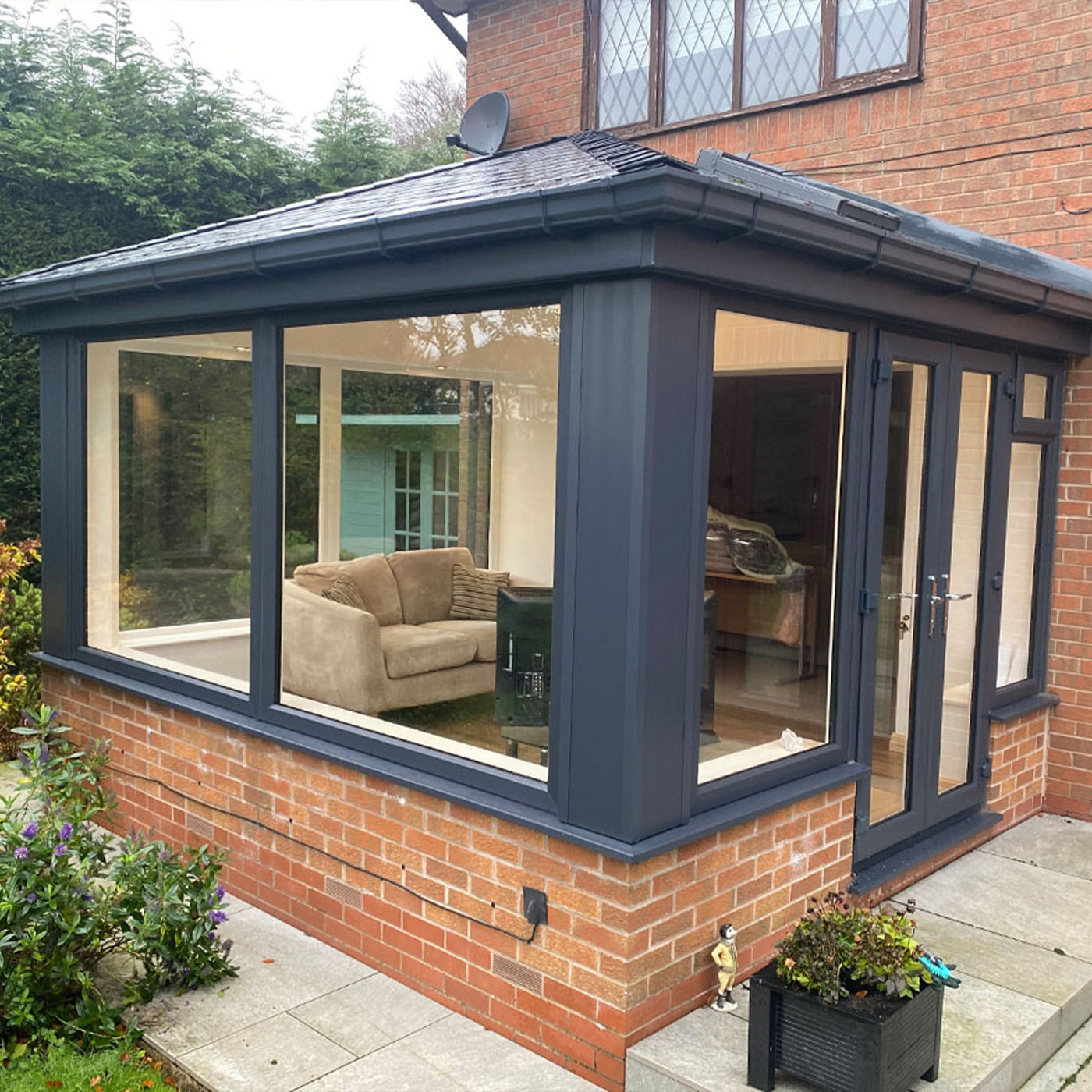
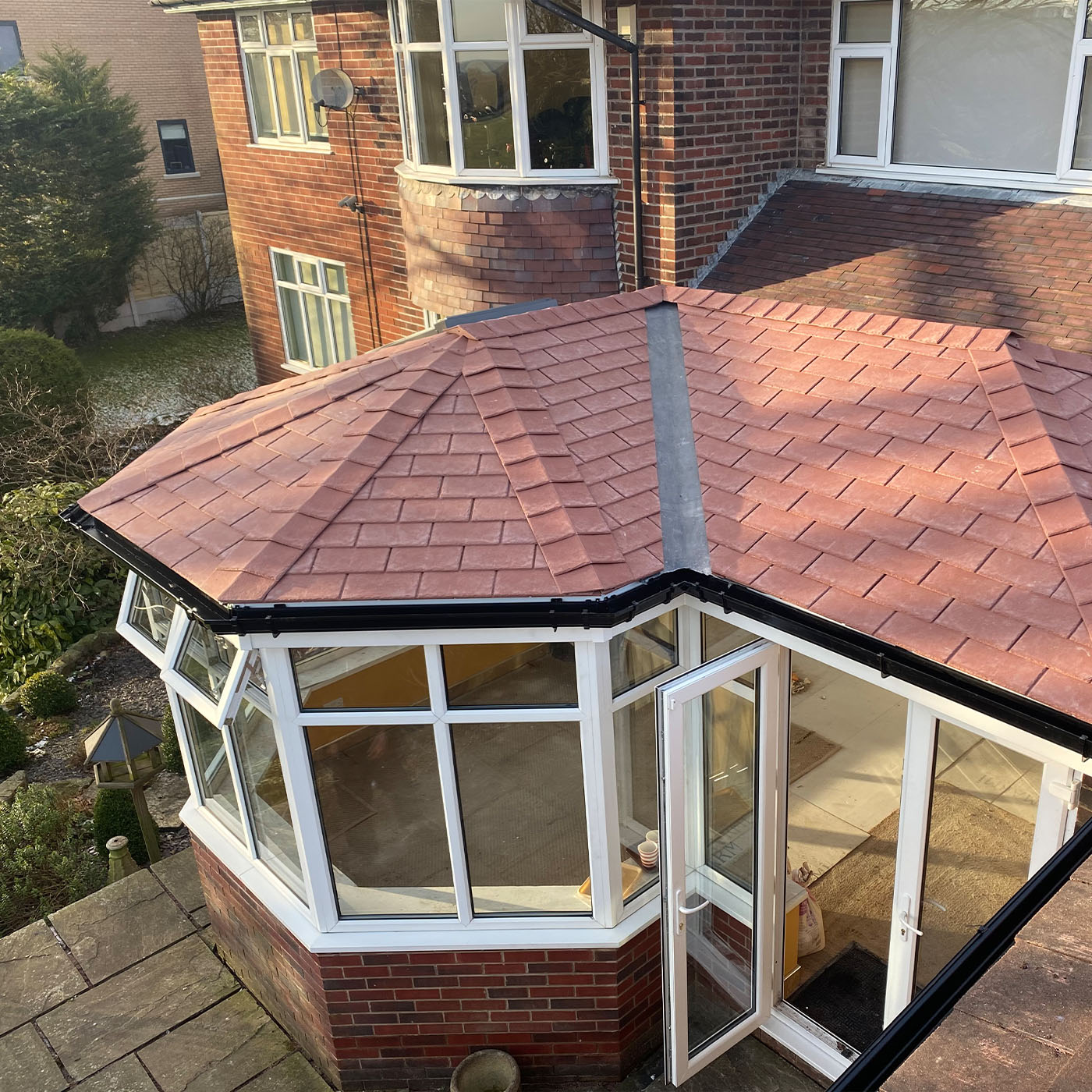
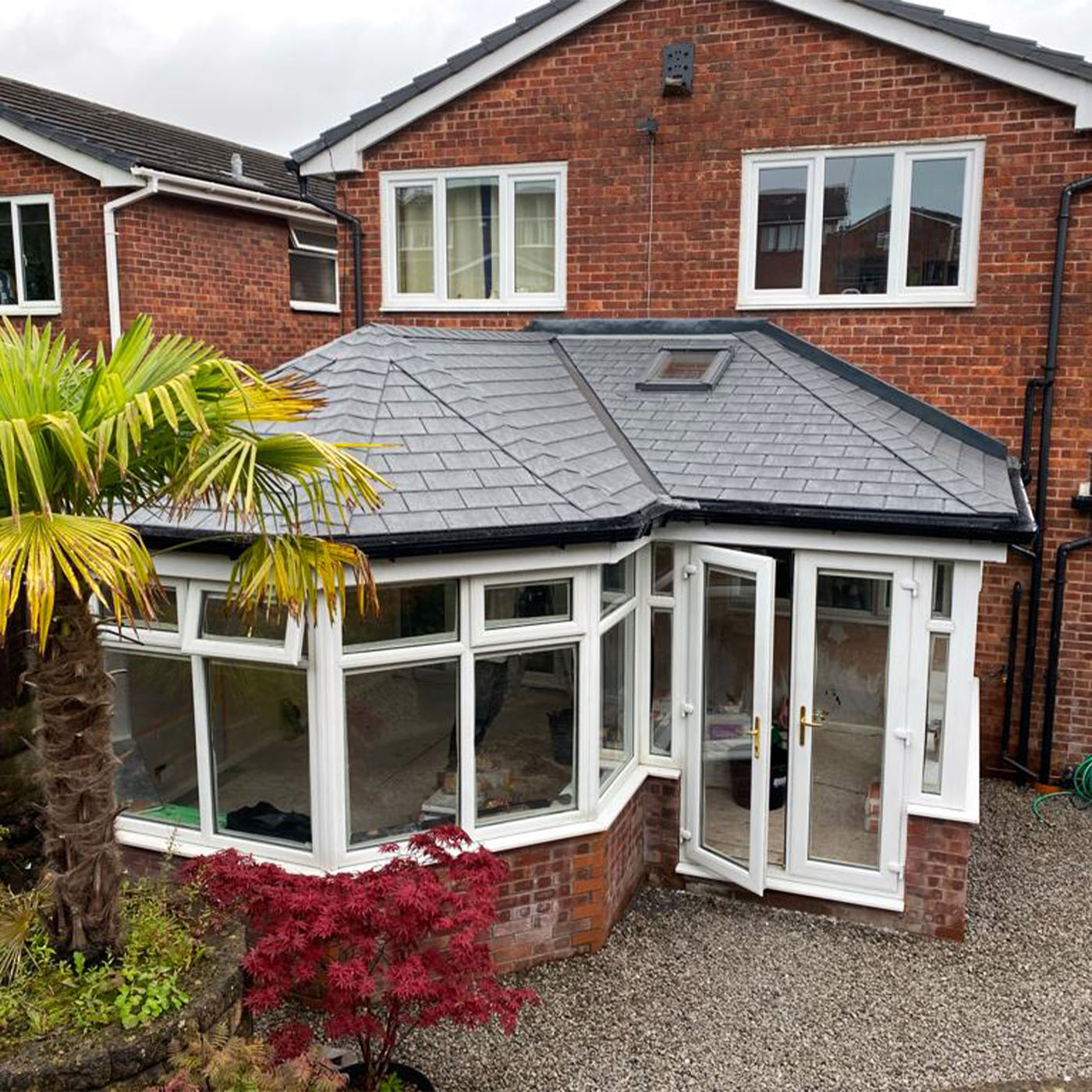
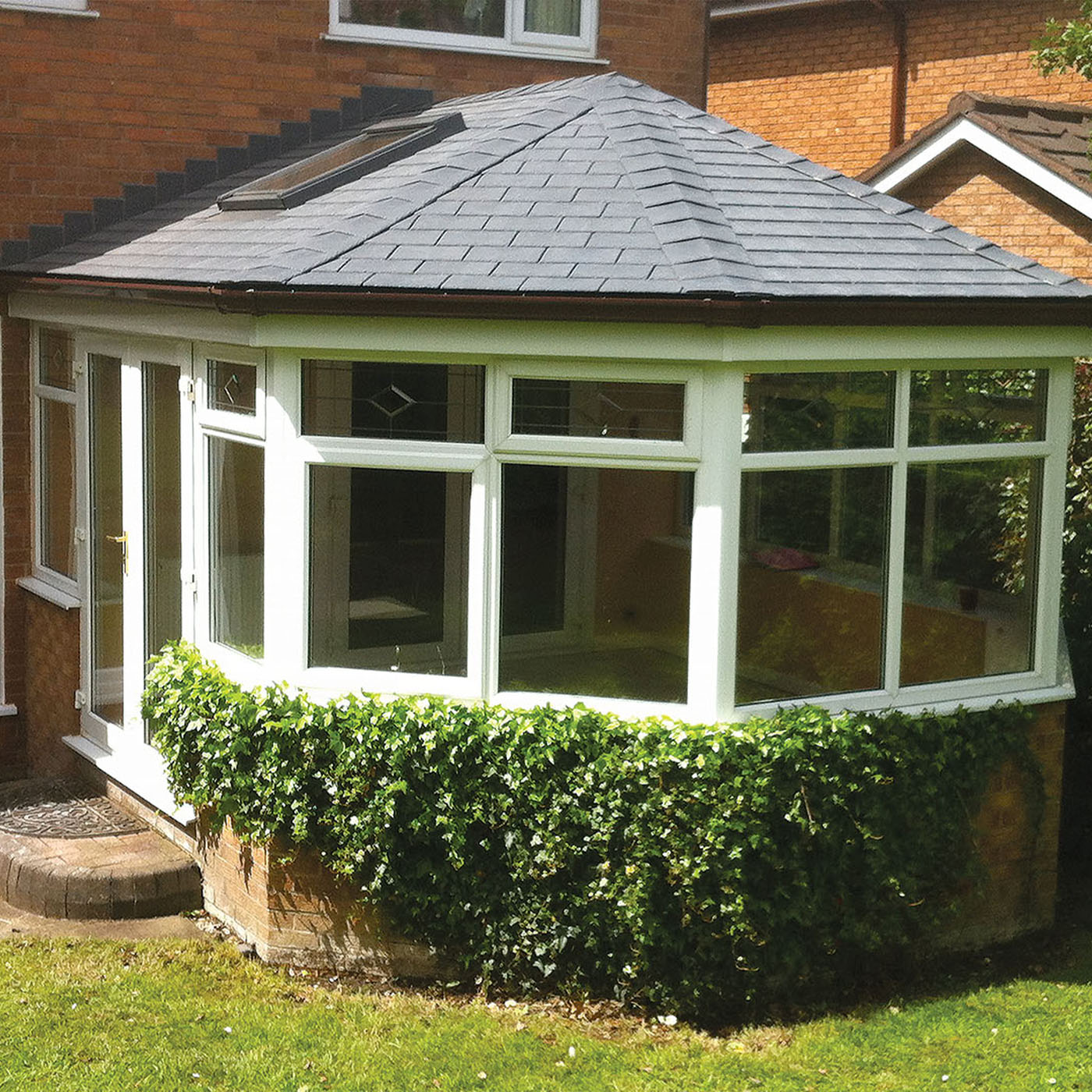
The biggest transformation of the three, and what we specialise in. A tiled conservatory roof turns the space from “sometimes usable” to “a proper room”, which is why it’s also the most expensive and the most involved to install.
Pros
- Best U-value. Our Insullite system achieves 0.15 W/m²K; competitive systems typically 0.18.
- Longest lifespan, at 40 to 50+ years with Tapco or Metrotile tiles.
- Near-silent in rain. No drumming, no impact noise.
- Eliminates summer overheating. The room stays pleasantly cool.
- Adds resale value. Room is usually classified as habitable floor space.
- Cuts energy use. Typical saving of £300 to £500 a year on heating for a Lancashire home.
- Optional Velux roof windows bring in controlled daylight without losing insulation.
- 10-year insurance-backed guarantee (on our installations).
Cons
- Highest upfront cost, at £6,000 to £15,000 installed.
- Reduces natural light significantly unless Velux windows are added.
- Building Regulations always required. Not optional.
- Longer installation, at 3 to 5 working days.
- Not all existing conservatory structures can take one without structural reinforcement (though lightweight systems like ours are designed to minimise this).
Who it’s for
- Anyone who wants to actually use the conservatory year-round.
- Homeowners planning to stay put 5+ years and wanting to cut energy bills.
- Those selling up within 2 to 3 years and wanting to add value before listing.
- Properties where the existing conservatory is structurally sound but the roof has failed.
Which roof is “warmest”? The U-value comparison
U-value is the standard measure of heat loss through a building element. Lower is better.
| Roof type | Typical U-value | Heat loss vs tiled |
|---|---|---|
| Polycarbonate | ~3.0 W/m²K | 20x worse than a 0.15 tiled roof |
| Single-glazed glass (old) | 5.0+ W/m²K | 33x worse |
| Modern double-glazed glass | 1.4 to 1.6 W/m²K | 9 to 10x worse |
| Triple-glazed solar-control glass | 1.0 W/m²K | 6.7x worse |
| Guardian Warm Roof (tiled) | 0.18 W/m²K | 1.2x worse |
| Roof2Room Insullite (tiled) | 0.15 W/m²K | Baseline |
| Building Regs minimum for extension | 0.18 W/m²K |
The gap between any glass option and any tiled option is not small. That’s the number to focus on if year-round comfort is your priority.
Which roof lasts longest?
| Roof type | Typical lifespan |
|---|---|
| Polycarbonate | 10 to 15 years |
| Glass | 15 to 25 years |
| Tiled (premium synthetic) | 40 to 50+ years |
| Tiled (natural slate/clay, if structure allows) | 60 to 100+ years |
If you replace a polycarbonate roof with a tiled one today, you’re likely fitting the last roof you’ll ever put on that conservatory.
Which roof is best for noise?
Rain noise is a surprisingly common reason people upgrade. Ranked loudest to quietest:
- Polycarbonate has pronounced drumming, especially in heavy rain. Audible throughout adjoining rooms.
- Glass has moderate impact sound, noticeably quieter than polycarbonate.
- Tiled is effectively silent. Insulation layer and tile mass absorb sound.
Which roof adds the most value to your home?
Estate agents don’t formally rate conservatory roofs, but we see the pattern consistently:
- Polycarbonate conservatory is treated as a “bonus room” with little or no value uplift.
- Glass conservatory with thermally efficient roof gets a modest value uplift, often treated as transitional space.
- Tiled conservatory roof is typically treated as habitable floor space, adding 5 to 10% to the value of an average 3-bed.
The uplift often exceeds the cost of the roof, which makes tiled roofs one of the better-value home improvements you can make.
Our honest recommendation
If you’re genuinely only going to use the room in summer, and budget is tight, a polycarbonate or basic glass roof is fine. Just know what you’re getting.
If you want to use the room year-round, cut your bills, and have a space that feels like a proper extension rather than a greenhouse, a tiled conservatory roof is the right answer 9 times out of 10. The extra £3,000 to £6,000 over a glass replacement typically pays back in energy savings, added resale value, and the thing you can’t put a number on: actually using the room.
For homeowners who want the biggest transformation, our Iconic Garden Room replaces the frames as well as the roof, giving you a space that looks and feels exactly like a proper extension for a fraction of the cost of a new build.
Frequently asked questions
Which is cheaper: tiled, glass or polycarbonate conservatory roof? Polycarbonate is cheapest (£2,000 to £6,500 installed in 2026), then glass (£3,300 to £9,500), with tiled the most expensive (£6,000 to £15,000). But tiled has by far the longest lifespan, often 3 to 4 times that of polycarbonate, so the cost-per-year can work out similar.
Which conservatory roof is warmest? Tiled conservatory roofs are warmest, with U-values around 0.15 to 0.18 W/m²K. That’s roughly 7 to 10 times more thermally efficient than a modern glass roof and around 20 times better than polycarbonate.
Is a glass conservatory roof better than tiled? Only if your top priority is maximum natural light. On every other measure (insulation, lifespan, noise, year-round comfort, resale value) tiled wins. Many of our customers compromise by fitting a tiled roof with Velux windows, which gives year-round performance with controlled daylight.
Can I put a tiled roof on my existing conservatory? In most cases, yes. Lightweight tiled roof systems (like our Insullite) are designed to fit on existing conservatory structures without major reinforcement. A proper survey will confirm it before any work starts.
Do all three roof types need Building Regulations? No. Only tiled (solid) roofs require Building Regulations, because a tiled roof re-classifies the conservatory as a permanent extension. Glass and polycarbonate replacements usually remain exempt as conservatory roofs.
What’s the best tiled conservatory roof on the UK market? There are a handful of quality systems including Guardian Warm Roof, SupaLite, Ultraframe and our own Insullite. Ours achieves a U-value of 0.15 W/m²K (matching the best in the market), uses a ventilated timber structure to eliminate condensation, and is Type Approved by MFA Building Control.
How long does it take to replace a conservatory roof? A tiled roof replacement takes 3 to 5 working days. A glass roof is 2 to 3 days. Polycarbonate is 1 to 2 days. Our Iconic Garden Room full replacement (roof + frames) takes around 10 to 14 working days.